About Water Damage Restoration in Hayward, CA
24/7 water damage restoration for Hayward and the surrounding East Bay, from the hills to the bay shoreline.
24/7 water damage restoration for Hayward homes and businesses
East Bay Water Damage covers water damage restoration in Hayward, CA. The restoration team extracts standing water, dries the structure to the IICRC S500 standard and documents every step for your insurance claim.
The work starts with the source. The tech who does the walkthrough traces where the water came from and maps how far it traveled, because a crawl space, a slab and a second-floor ceiling each dry differently.
Hayward has its own patterns: winter storm water under raised-foundation homes, slab leaks in postwar tract houses on clay soil, aging galvanized lines in the older neighborhoods and damp bay air that slows every dry-out. The drying plan is built around those facts, not a template.
Scope, price and schedule are set with you after the damage is seen, and the drying goal is a reading, not a date on a calendar.
Find us on Google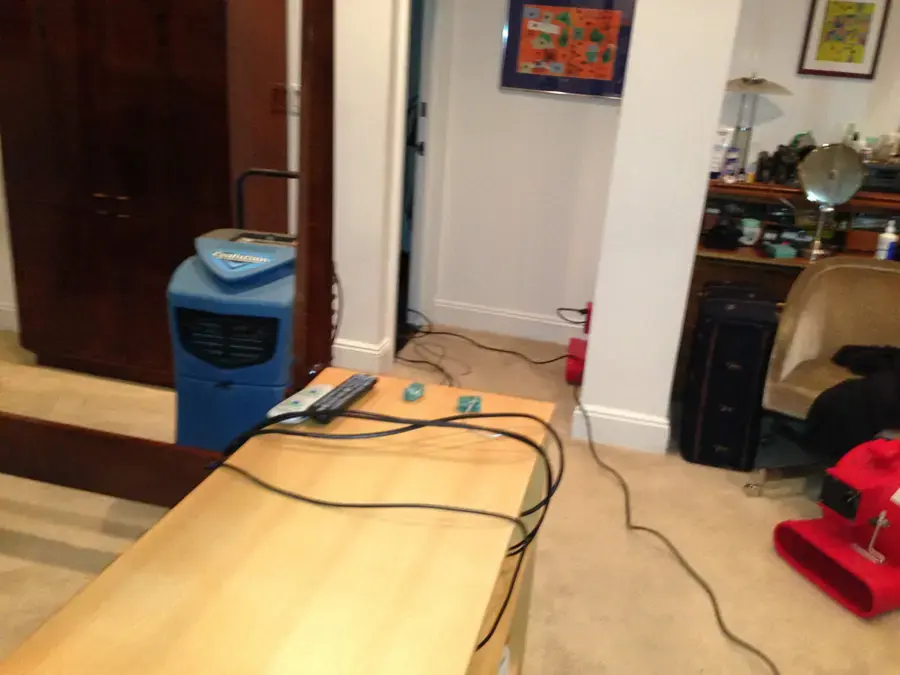
How water damage work is held to a standard in Hayward
IICRC S500 is the industry drying standard. These are the parts of it a Hayward homeowner can check.
Rapid local response
The response team answers day or night and gets a crew moving toward Hayward and the nearby East Bay communities.
IICRC S500 drying standard
IICRC S500 is the industry drying standard. Crews map moisture first and pull equipment only when readings say dry.
Claim-ready documentation
Most crews log daily moisture readings and take timestamped photos before any demolition, which is what an adjuster reads.
East Bay water experts
Crawl space storm water, slab leaks on clay soil, galvanized pipe failures and fog-slowed drying are the losses Hayward homes actually have.
What happens after the call
Every loss follows the same order of work, from the moisture map to the final dry reading.
- 01
Map the moisture first
The tech who does the walkthrough traces the source, then maps wet materials with thermal imaging and pinless meters before any equipment goes down.
- 02
Extract the standing water
The extraction crew pulls water with truck-mounted extraction, so it leaves the building instead of wicking into the next room.
- 03
Set the drying to the room
The drying team places air movers to each room's evaporation load and runs LGR dehumidifiers, with desiccants for Class 4 materials.
- 04
Verify dry, then document
Most crews log readings daily and pull equipment once wet materials sit within 2 to 4 points of a dry reference material.
Questions about a water loss in Hayward? Call.
The restoration team answers day or night and can talk through what you are seeing before any equipment goes down.