Commercial Water Damage in Hayward, CA
A burst sprinkler line, roof leak or backup can shut a business down. The Hayward commercial drying team extracts, contains and dries in phases so as much of the building as possible stays open.
(888) 774-9605Call about the Hayward commercial loss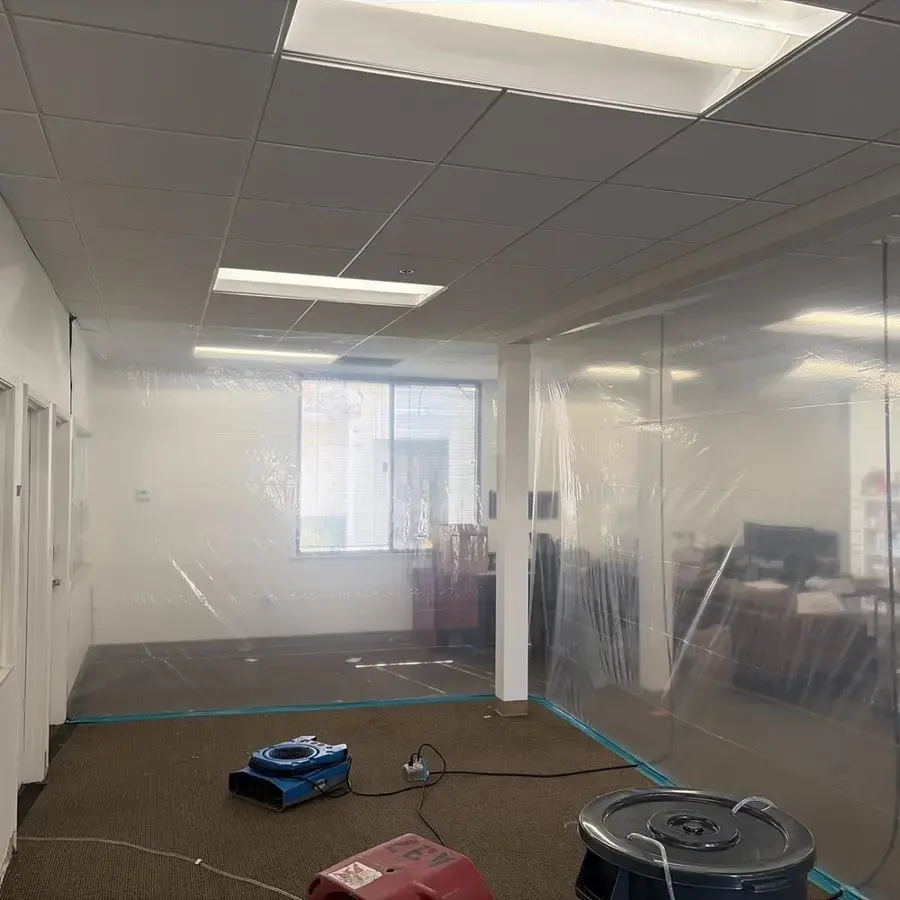
What to do the moment you find commercial water damage
- Stop the water
Close the zone valve for a sprinkler break or the building main, and call the fire alarm company if a sprinkler flowed.
- Protect people and power
Keep staff and customers away from wet areas and shut power to affected circuits if the panel is dry.
- Move inventory and records
Lift stock, files and electronics off the floor and away from the water.
- Photograph and notify
Take photos, then notify the property manager or owner and your insurer.
Hayward's commercial side runs from the warehouses and distribution buildings along the I-880 corridor and the industrial area in west Hayward to the offices, clinics, shops and restaurants downtown, along Mission Boulevard and around Southland Mall. A water loss in any of them costs more by the day it stays open.
What does commercial water damage cost in Hayward, CA?
In Hayward, CA, commercial water damage restoration typically runs $3,000 to $30,000 or more, depending on the square footage, the water category, the materials involved and how the drying is phased around operations.
- Extraction and containment
- Carpet tile and drywall checked
- LGR drying
- Phased drying
- Category 2 or 3 handling
- Daily logs
- Large-capacity equipment
- Desiccant drying
- Extended monitoring
What moves the number: square footage, the water category, flooring and ceiling types, how the work is phased around operations and the number of equipment days.
For a closer planning range, try the water damage cost calculator. These are typical ranges, not quotes.
How commercial water damage is handled in Hayward
IICRC S500 is the industry drying standard. It sets the order of the work, and the equipment stays until the readings say dry, not until the room looks dry.
- 01
Map the moisture first
The tech who does the walkthrough traces the source, then maps wet materials with thermal imaging and pinless meters before any equipment goes down.
- 02
Extract the standing water
The extraction crew pulls water with truck-mounted extraction, so it leaves the building instead of wicking into the next room.
- 03
Set the drying to the room
The drying team places air movers to each room's evaporation load and runs LGR dehumidifiers, with desiccants for Class 4 materials.
- 04
Verify dry, then document
Most crews log readings daily and pull equipment once wet materials sit within 2 to 4 points of a dry reference material.
Common commercial losses
- Fire sprinkler line breaks and accidental head discharges
- Roof leaks through large flat roofs during winter storms
- Restroom and kitchen drain backups in restaurants and offices
- Water heater and supply line failures in tenant spaces
- Storm water entering loading docks and ground-floor suites
Keeping the business running
The response team starts with a walkthrough and moisture map, then sets containment so wet areas are sealed off from the parts of the building that can stay open. Drying often runs in phases, suite by suite or aisle by aisle, and equipment placement is planned around foot traffic, exits and inventory.
Large-capacity LGR dehumidifiers and air movers handle big open spaces, and desiccant units cover dense materials or cool warehouse air. Commercial carpet tile, ceiling tile and drywall are removed only where readings show they cannot be dried.
Trade fact: on a commercial loss, the daily drying log, the moisture map and timestamped photos are what a property manager, owner and adjuster all read. Each day of readings shows progress toward the drying goal.
Category and safety on commercial jobs
Sprinkler water that sat in pipes for years is often treated as Category 2 or 3, and restaurant drain backups are Category 3. The crew follows the matching protocol, with containment and HEPA air scrubbers where contamination or dust is a concern.
For workplace safety during water cleanup, see OSHA flood cleanup safety, and for flood insurance on commercial property, FloodSmart from FEMA. Related: structural drying.
Commercial Water Damage coverage across Hayward
The restoration team handles commercial water damage in every Hayward ZIP and the neighboring East Bay communities.
The Hayward restoration crew handles commercial water damage across Downtown, Burbank, Mount Eden, Tennyson, Schafer Park and the Hayward Highlands, plus Castro Valley, San Lorenzo and San Leandro.
ZIP codes 94540, 94541, 94542, 94543, 94544, 94545 and 94557 are all covered.
See every neighborhood and ZIP coveredCommercial Water Damage questions in Hayward, CA
Can the business stay open during drying?
Often, in part. Containment seals off wet areas so the rest of the building can operate while drying runs in phases.
Is sprinkler water clean?
Not always. Water that sat in sprinkler pipes is often treated as Category 2 or 3 because of rust, sediment and treatment chemicals.
How long does commercial drying take?
A single suite often dries in three to five days. Large floors and dense materials take longer.
What documentation do owners and adjusters need?
The moisture map, daily drying logs, timestamped photos and the category and class of the loss.
Can inventory be saved?
Stock that is moved off wet floors quickly often survives. Porous goods touched by Category 3 water usually cannot be saved.
Is commercial water damage covered?
It depends on the property and business policies. Coverage depends on your policy, so it is worth checking with your own insurer.
Commercial Water Damage in Hayward? Call before it spreads.
The longer water sits, the further it wicks into drywall, subfloor and framing. The Hayward water damage pros answer day or night.