Burst Pipe Cleanup in Hayward, CA
A split supply line can put hundreds of gallons into a wall or ceiling. The Hayward restoration team extracts the water, opens only what has to open and dries the cavity to a verified reading.
(888) 774-9605Call about the Hayward pipe burst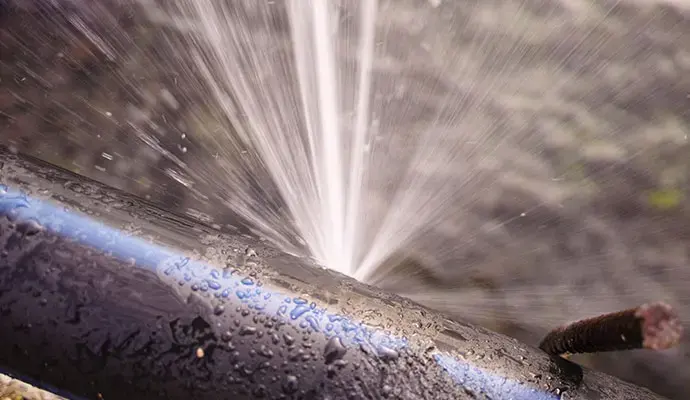
What to do the moment you find a burst pipe
- Shut the main valve
Close the main, usually at the front of the house or in the garage, then open a low faucet to drain pressure.
- Kill power to wet areas
Switch off breakers for rooms where water reached outlets or light fixtures, if the panel area is dry.
- Catch and move
Put buckets under active drips and move furniture and electronics out of the wet area.
- Document before cleanup
Photograph the pipe, the water and the ceilings or walls it reached before anything is thrown out.
A pressurized supply line does not drip when it fails. It sprays, and it keeps spraying until the main is shut. In Hayward the usual suspects are aging galvanized lines in pre-1950 homes, copper fittings in postwar tract houses and plastic supply connectors behind sinks and toilets.
What does burst pipe cleanup cost in Hayward, CA?
In Hayward, CA, burst pipe cleanup typically runs $1,200 to $6,500, depending on how many rooms the water reached, whether ceilings are wet and how much drywall and insulation must come out.
- Extraction and flood cut
- Wet insulation removed
- Three to four drying days
- Walls and flooring affected
- Air movers and LGR units
- Daily moisture logs
- Ceiling drywall opened
- Two levels dried
- Full structural drying
What moves the number: how long the line sprayed, how many rooms and levels are wet, drywall and insulation removal, flooring type and how fast drying started.
For a closer planning range, try the water damage cost calculator. These are typical ranges, not quotes.
How a burst pipe is handled in Hayward
IICRC S500 is the industry drying standard. It sets the order of the work, and the equipment stays until the readings say dry, not until the room looks dry.
- 01
Map the moisture first
The tech who does the walkthrough traces the source, then maps wet materials with thermal imaging and pinless meters before any equipment goes down.
- 02
Extract the standing water
The extraction crew pulls water with truck-mounted extraction, so it leaves the building instead of wicking into the next room.
- 03
Set the drying to the room
The drying team places air movers to each room's evaporation load and runs LGR dehumidifiers, with desiccants for Class 4 materials.
- 04
Verify dry, then document
Most crews log readings daily and pull equipment once wet materials sit within 2 to 4 points of a dry reference material.
Why Hayward pipes fail
- Galvanized steel in the older homes of Burbank, Upper B Street and Prospect Hill rusts from the inside until a joint lets go
- Copper lines and fittings in 1950s to 1970s homes wear thin at elbows and solder joints
- Buried lines near the Hayward Fault can be stressed as the ground slowly creeps
- Braided connectors and angle stops under sinks age out and split
A burst that starts as clean water stays Category 1 only for a while. Water that sits in a wall cavity, soaks insulation or runs across dirty surfaces can shift toward Category 2, which changes what can be dried in place.
Drying inside the wall, not just the room
The tech who does the walkthrough uses thermal imaging and pinless meters to follow the water behind drywall and under flooring, because a burst inside a wall rarely stays in one stud bay. The extraction crew pulls standing water first, then the drying team decides what to open.
Often a flood cut, a strip of drywall removed above the baseboard, or a few drilled holes let air reach the cavity. Wet insulation usually comes out because it holds water against the framing. Air movers and LGR dehumidifiers then run until the studs and bottom plate read dry.
Repair comes after dry
A plumber fixes the line; the restoration crew handles the water. Drywall, paint and flooring go back only after the structure reaches the drying goal. Closing a wall early traps moisture and is how many hidden mold problems start.
Trade fact: most burst-pipe claims are reviewed as sudden and accidental discharge. The claim file carries the moisture map, daily readings and photos taken before anything is cut open.
For leak prevention tips, see the EPA WaterSense leak page, and for moisture and mold basics, the EPA mold page. Related: ceiling leak water damage.
Burst Pipe Cleanup coverage across Hayward
The restoration team handles a burst pipe in every Hayward ZIP and the neighboring East Bay communities.
The Hayward restoration crew handles a burst pipe across Downtown, Burbank, Mount Eden, Tennyson, Schafer Park and the Hayward Highlands, plus Castro Valley, San Lorenzo and San Leandro.
ZIP codes 94540, 94541, 94542, 94543, 94544, 94545 and 94557 are all covered.
See every neighborhood and ZIP coveredBurst Pipe Cleanup questions in Hayward, CA
Should I turn the water back on after the plumber fixes the pipe?
Yes, once the plumber has repaired it. Drying continues separately, and the restoration crew checks that no new water is reaching the wall.
Does all the drywall have to be replaced?
Usually not. A flood cut above the baseboard or a few drilled holes let the cavity dry. Drywall that is crumbling, sagging or touched by dirty water is removed.
Why take out wet insulation?
Insulation holds water against the studs and slows drying. Removing it lets air reach the framing so the cavity can reach the drying goal.
How long does a burst pipe dry-out take?
A contained loss usually dries in three to five days. Ceilings, multiple rooms and plaster walls in older Hayward homes take longer.
Can the pipe burst again?
Old galvanized and worn copper lines often fail in more than one spot. Many homeowners have a plumber check the rest of the line while the walls are open.
Is a burst pipe covered by insurance?
Sudden and accidental discharge is often reviewed favorably, while slow leaks usually are not. Coverage depends on your policy, so it is worth checking with your own insurer.
Burst Pipe Cleanup in Hayward? Call before it spreads.
The longer water sits, the further it wicks into drywall, subfloor and framing. The Hayward water damage pros answer day or night.