Structural Drying in Hayward, CA
Surface-dry is not dry. The Hayward drying team maps moisture, sets air movers and dehumidifiers to each room's load and keeps the equipment running until the readings say the structure is dry.
(888) 774-9605Ask the Hayward drying team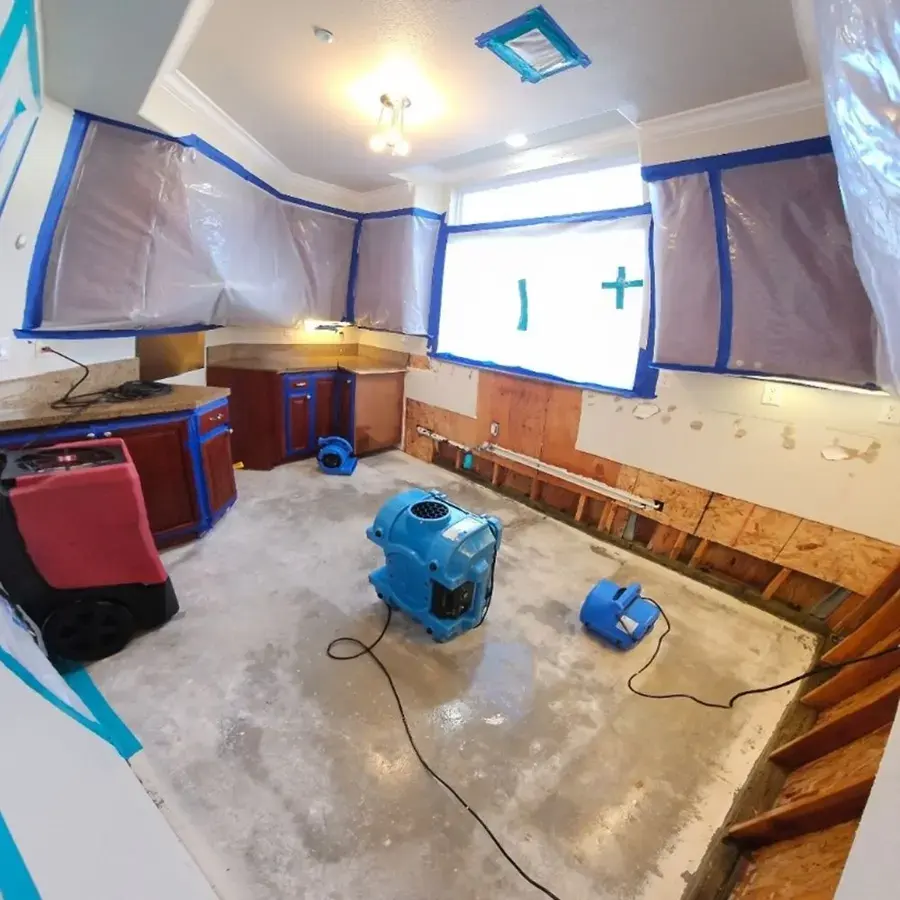
What to do the moment you find wet framing
- Stop the water first
Drying cannot start until the source is stopped and standing water is extracted.
- Leave the walls closed for now
Do not cut or patch drywall before the moisture map is done, so nothing wet gets sealed in.
- Keep the space closed
In foggy or rainy weather, keep windows shut so outdoor humidity does not slow the drying.
- Leave equipment running
Once drying starts, keep air movers and dehumidifiers on and plugged in, day and night.
Structural drying is the part of a water loss that decides whether it stays fixed. Framing, subfloor, plaster and concrete hold water long after the surface looks fine, and closing up wet materials is how musty odors, cupped floors and mold follow a leak.
What does structural drying and dehumidification cost in Hayward, CA?
In Hayward, CA, structural drying typically runs $1,000 to $6,000, depending on how many rooms are wet, the class of loss and how many days of equipment the materials need.
- Moisture map
- Air movers and LGR
- Three to four days
- Walls and subfloor drying
- Daily psychrometric logs
- Four to six days
- Hardwood, plaster or slab
- Desiccant dehumidifiers
- Extended drying
What moves the number: the class of loss, square footage, material types, the number of equipment days and outdoor humidity during the dry-out.
For a closer planning range, try the water damage cost calculator. These are typical ranges, not quotes.
How wet framing is handled in Hayward
IICRC S500 is the industry drying standard. It sets the order of the work, and the equipment stays until the readings say dry, not until the room looks dry.
- 01
Map the moisture first
The tech who does the walkthrough traces the source, then maps wet materials with thermal imaging and pinless meters before any equipment goes down.
- 02
Extract the standing water
The extraction crew pulls water with truck-mounted extraction, so it leaves the building instead of wicking into the next room.
- 03
Set the drying to the room
The drying team places air movers to each room's evaporation load and runs LGR dehumidifiers, with desiccants for Class 4 materials.
- 04
Verify dry, then document
Most crews log readings daily and pull equipment once wet materials sit within 2 to 4 points of a dry reference material.
Why Hayward drying is its own job
Hayward sits between the bay and the East Bay hills, and for much of the year a marine layer and bay fog keep outdoor air damp. Opening windows rarely helps. The drying team closes the space and controls the air inside it, so dehumidifiers pull moisture out instead of fighting the weather.
How the drying plan is built
- Moisture mapping: the tech who does the walkthrough uses pinless meters, pin meters and thermal imaging to mark every wet area
- Class of loss: Class 1 through 4 sets how much equipment a room needs, with Class 4 for dense materials like hardwood, plaster and concrete
- Air movers: placed to the evaporation load of each room, aimed along walls and under cabinets
- Dehumidification: LGR dehumidifiers for most losses, desiccant units for Class 4 materials and cool crawl spaces
- Daily readings: psychrometric readings of the air and moisture readings of the materials, logged every day
When the equipment comes out
Equipment stays until the readings say dry, not until it looks dry. The drying goal is wet material within 2 to 4 points of a dry reference material of the same type in an unaffected part of the building. A contained Class 1 or 2 loss usually gets there in three to five days; hardwood, plaster, slab and crawl space framing take longer.
Trade fact: the daily drying log is also the best evidence in an insurance claim file. It shows the starting moisture, the equipment used and the day the structure reached the goal.
For moisture control basics, see the Department of Energy moisture control page, and for why drying matters, the EPA mold page. Try the drying-time estimator.
Structural Drying and Dehumidification coverage across Hayward
The restoration team handles wet framing in every Hayward ZIP and the neighboring East Bay communities.
The Hayward restoration crew handles wet framing across Downtown, Burbank, Mount Eden, Tennyson, Schafer Park and the Hayward Highlands, plus Castro Valley, San Lorenzo and San Leandro.
ZIP codes 94540, 94541, 94542, 94543, 94544, 94545 and 94557 are all covered.
See every neighborhood and ZIP coveredStructural Drying and Dehumidification questions in Hayward, CA
What does structural drying mean?
Drying the building itself, meaning framing, subfloor, drywall and concrete, to a measured goal, not just drying what you can see and touch.
Why not open the windows?
In Hayward, fog and a damp marine layer often make outdoor air wetter than the air inside. Closed-room dehumidification dries faster.
How is dry measured?
Crews compare readings on the wet material with a dry reference material of the same type in an unaffected area. The goal is within 2 to 4 points.
Can I turn the equipment off at night?
No. Air movers and dehumidifiers work around the clock, and turning them off adds days to the job.
What is Class 4?
Class 4 covers dense materials like hardwood, plaster, concrete and stone that hold water tightly. They need specialty drying and more time.
How long does it take?
A contained Class 1 or 2 loss usually dries in three to five days. Hardwood, plaster, slab and crawl space framing take longer.
Structural Drying and Dehumidification in Hayward? Call before it spreads.
The longer water sits, the further it wicks into drywall, subfloor and framing. The Hayward water damage pros answer day or night.