Water Extraction in Hayward, CA
Standing water keeps climbing drywall and soaking subfloor until it is pulled out. The Hayward extraction crew removes it with truck-mounted extraction, then sets the drying to the IICRC S500 standard.
(888) 774-9605Get the Hayward water pulled out now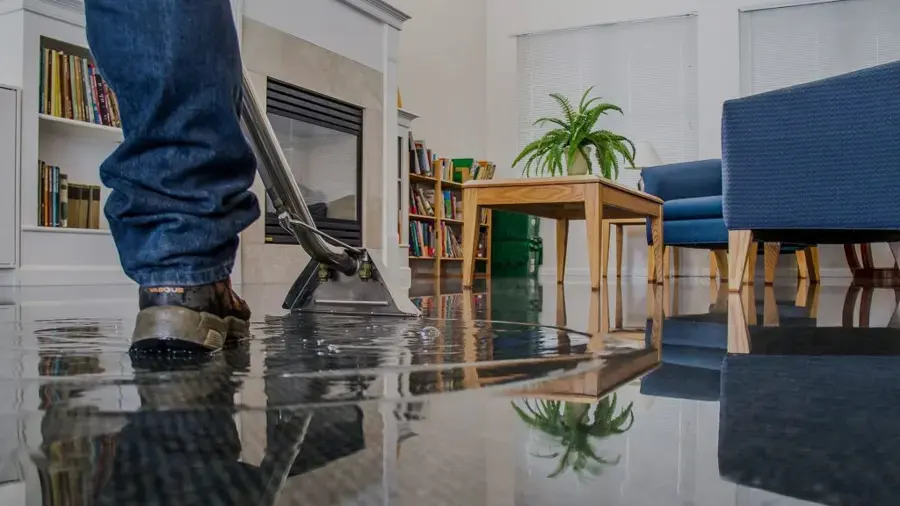
What to do the moment you find standing water
- Stop the source
Shut the main water valve or the fixture valve so no new water reaches the floor.
- Cut power to wet rooms
Switch off the breakers for flooded rooms, but only if the panel area is dry.
- Stay clear of the water
Keep people and pets away from standing water near outlets, cords and appliances.
- Photograph, then call
Take photos of the water and the damage before moving anything, then call for extraction.
Water extraction is the first move on almost every Hayward water loss. The faster standing water leaves the building, the less of it wicks into drywall, baseboard, carpet pad and the subfloor below, and the shorter the drying job becomes.
What does water extraction and removal cost in Hayward, CA?
In Hayward, CA, water extraction and removal typically runs $500 to $3,500, depending on how many square feet are wet, the water category and whether a crawl space or carpet pad is involved.
- Hard floor or carpet
- Single extraction visit
- Air movers set after
- Weighted carpet extraction
- Pad lifted where needed
- LGR dehumidifiers
- Submersible pump first
- Porous materials removed
- Antimicrobial applied
What moves the number: square footage that is wet, water category, carpet and pad versus hard floors, crawl space access and how long the water sat.
For a closer planning range, try the water damage cost calculator. These are typical ranges, not quotes.
How standing water is handled in Hayward
IICRC S500 is the industry drying standard. It sets the order of the work, and the equipment stays until the readings say dry, not until the room looks dry.
- 01
Map the moisture first
The tech who does the walkthrough traces the source, then maps wet materials with thermal imaging and pinless meters before any equipment goes down.
- 02
Extract the standing water
The extraction crew pulls water with truck-mounted extraction, so it leaves the building instead of wicking into the next room.
- 03
Set the drying to the room
The drying team places air movers to each room's evaporation load and runs LGR dehumidifiers, with desiccants for Class 4 materials.
- 04
Verify dry, then document
Most crews log readings daily and pull equipment once wet materials sit within 2 to 4 points of a dry reference material.
What extraction removes, and what it leaves behind
Extraction pulls liquid water. It does not dry the structure. The extraction crew works through every place water collects:
- Standing water on tile, vinyl, laminate and hardwood
- Water held in carpet and the pad underneath
- Water trapped under cabinets, toe kicks and appliances
- Water pooled in a crawl space after a heavy storm
The water that has already moved into materials comes out later through air movers and dehumidifiers. That is why the tech who does the walkthrough takes moisture readings before extraction starts and again once it ends: the second map sets the drying plan.
Truck-mounted and portable extraction in Hayward homes
Truck-mounted extraction carries the most suction and sends the water out of the building instead of into the next room. It suits single-story homes in Tennyson, Schafer Park and Mount Eden, where a hose can reach the loss from the driveway.
Portable units handle the places a truck hose cannot: upstairs condos near downtown, apartments along Mission Boulevard and tight crawl spaces under older Burbank and Upper B Street homes. For deep water under a raised foundation after an atmospheric river storm, the crew often starts with a submersible pump and finishes with extraction wands.
On carpet, weighted extraction tools press water out of the pad. Clean-water carpet that is extracted early can often be dried in place; carpet touched by Category 3 water is removed, not dried.
After the water is out
Once extraction ends, the drying team sets air movers to each room's evaporation load and runs LGR dehumidifiers to pull that moisture back out of the air. Bay fog and the damp marine layer mean open windows rarely help in Hayward, so closed-room dehumidification does the work.
Trade fact: the category of water decides what can be saved. Clean supply-line water is usually extracted and dried in place. Sewage and storm floodwater are Category 3, and porous materials they touch come out before any drying starts.
For health guidance on wet materials, see the EPA page on mold and moisture, and for flood safety before re-entering a flooded room, see Ready.gov on floods. For the next stage, see structural drying in Hayward.
Water Extraction and Removal coverage across Hayward
The restoration team handles standing water in every Hayward ZIP and the neighboring East Bay communities.
The Hayward restoration crew handles standing water across Downtown, Burbank, Mount Eden, Tennyson, Schafer Park and the Hayward Highlands, plus Castro Valley, San Lorenzo and San Leandro.
ZIP codes 94540, 94541, 94542, 94543, 94544, 94545 and 94557 are all covered.
See every neighborhood and ZIP coveredWater Extraction and Removal questions in Hayward, CA
How fast should standing water be extracted?
As soon as the source is stopped. Water keeps wicking into drywall, baseboard and subfloor, and mold can start inside 24 to 48 hours, so extraction is the first thing the response team does.
Can wet carpet be saved after extraction?
Often, if the water was clean and it was extracted quickly. Carpet and pad touched by sewage or storm floodwater are Category 3 and are removed rather than dried.
Is a shop vacuum enough?
A shop vacuum can move a small spill, but it cannot pull water out of carpet pad, wall cavities or a crawl space. Truck-mounted extraction removes far more water per pass.
What happens right after extraction?
The drying team maps moisture again, then sets air movers and LGR dehumidifiers to the room's load and records readings daily until the drying goal is met.
Does extraction work in a crawl space?
Yes. Deep water under a raised foundation is usually pumped first, then extracted from low spots, and the framing is dried with dehumidifiers and air movement.
How is extraction billed?
Most restoration companies price extraction by the square foot and the water category, with equipment days for drying added on top. Your policy decides what is covered, so check with your own insurer.
Water Extraction and Removal in Hayward? Call before it spreads.
The longer water sits, the further it wicks into drywall, subfloor and framing. The Hayward water damage pros answer day or night.