Roof Leak Water Damage in Hayward, CA
Wind-driven rain finds worn flashing, vents and old shingles, then soaks the attic before the ceiling shows a stain. The Hayward drying team traces the path and dries the attic, ceiling and walls.
(888) 774-9605Call about the Hayward roof leak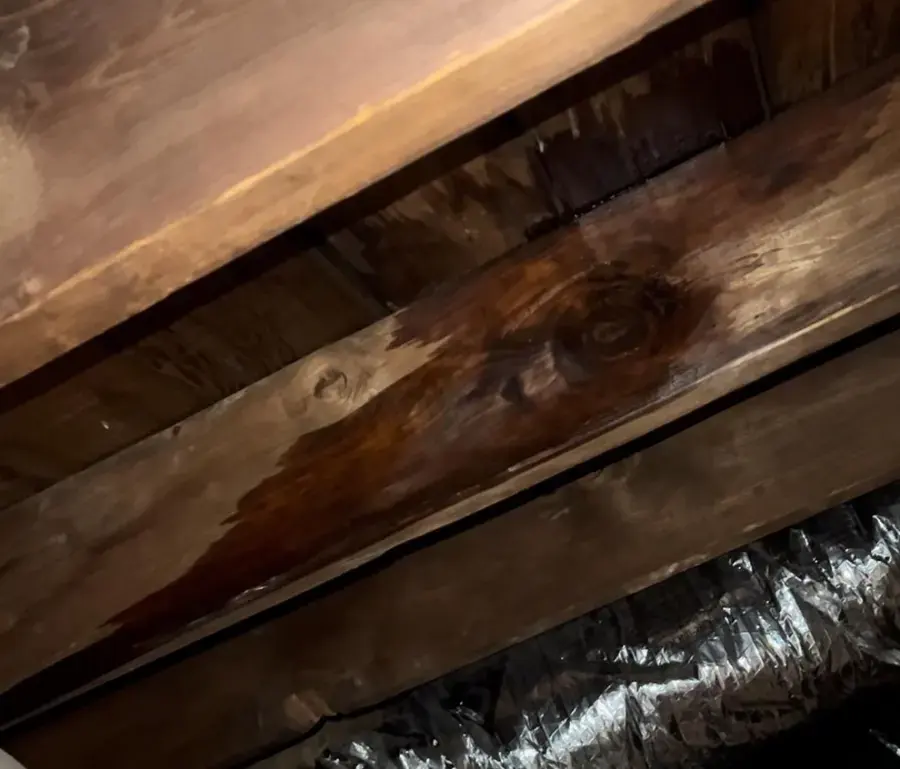
What to do the moment you find a roof leak
- Stay out from under a sagging ceiling
A ceiling holding water can fall. Keep people and pets out of the room.
- Catch the water
Put buckets and towels under drips, and move furniture and electronics away.
- Relieve a bulge only if safe
If a small bulge is dripping, a small hole at its lowest point lets it drain into a bucket, but only if you can reach it safely.
- Photograph inside and out
Take photos of the ceiling, the attic if safe and any visible roof damage.
Roof leaks in Hayward mostly arrive with the winter storms. Strong south winds push rain sideways under shingles, around chimney and vent flashing and through tired roofs on homes that have not been reroofed in decades. By the time a stain shows on the ceiling, the attic insulation above it is often soaked.
What does roof leak water damage cost in Hayward, CA?
In Hayward, CA, roof leak water damage typically runs $1,000 to $5,500 for the interior drying and removal, depending on how much attic insulation and ceiling drywall got wet and how many rooms are involved.
- Attic insulation checked
- Ceiling dried in place
- Air movers and dehumidifier
- Insulation removed
- Ceiling drywall cut out
- Daily readings
- Multiple ceilings and walls
- Attic drying
- Extended drying
What moves the number: how long the leak ran, how much insulation is wet, ceiling drywall removal, the number of rooms and how fast drying started. The roof repair is separate.
For a closer planning range, try the water damage cost calculator. These are typical ranges, not quotes.
How a roof leak is handled in Hayward
IICRC S500 is the industry drying standard. It sets the order of the work, and the equipment stays until the readings say dry, not until the room looks dry.
- 01
Map the moisture first
The tech who does the walkthrough traces the source, then maps wet materials with thermal imaging and pinless meters before any equipment goes down.
- 02
Extract the standing water
The extraction crew pulls water with truck-mounted extraction, so it leaves the building instead of wicking into the next room.
- 03
Set the drying to the room
The drying team places air movers to each room's evaporation load and runs LGR dehumidifiers, with desiccants for Class 4 materials.
- 04
Verify dry, then document
Most crews log readings daily and pull equipment once wet materials sit within 2 to 4 points of a dry reference material.
How a roof leak travels
Water rarely drips straight down from the hole. It runs along rafters, roof decking and the top of drywall before it finds a low point. That is why the tech who does the walkthrough uses thermal imaging and meters in the attic and on the ceiling below, instead of guessing from the stain.
- Worn flashing at chimneys, skylights and plumbing vents
- Shingles lifted or lost in a windstorm on hillside homes
- Flat and low-slope roofs on older homes and additions that pond water
- Clogged gutters that back water up under the roof edge
What gets dried and what gets removed
Wet blown-in or batt insulation holds water against the ceiling drywall and usually comes out of the wet area. Ceiling drywall that sags or crumbles is removed for safety. Drywall that is stained but firm can often be dried in place once the insulation above is out.
The drying team then runs air movers and LGR dehumidifiers in the room and, where needed, in the attic, and logs readings on the ceiling, walls and framing daily. A roofer handles the roof repair or a temporary tarp; the restoration crew handles the water inside.
Trade fact: a sagging, water-filled ceiling can drop without warning. Keep people out from under it and let the crew drain and remove it in a controlled way.
Roof leaks and the claim file
Insurers often look at whether storm damage opened the roof or whether the roof simply wore out. Photos of the attic, the roof damage and the ceiling before removal, along with the moisture map and daily readings, help the adjuster see what happened.
For storm readiness, see Ready.gov on floods and storms, and for attic moisture basics, the Department of Energy moisture control page. Related: ceiling leak water damage.
Roof Leak Water Damage coverage across Hayward
The restoration team handles a roof leak in every Hayward ZIP and the neighboring East Bay communities.
The Hayward restoration crew handles a roof leak across Downtown, Burbank, Mount Eden, Tennyson, Schafer Park and the Hayward Highlands, plus Castro Valley, San Lorenzo and San Leandro.
ZIP codes 94540, 94541, 94542, 94543, 94544, 94545 and 94557 are all covered.
See every neighborhood and ZIP coveredRoof Leak Water Damage questions in Hayward, CA
Who fixes the roof?
A roofer repairs the roof or sets a temporary tarp. The restoration crew dries and removes the water-damaged materials inside.
Does wet attic insulation have to come out?
Usually, in the wet area. Soaked insulation holds water against the ceiling and does not dry well in place.
Can a stained ceiling be saved?
Often, if the drywall is firm and the insulation above is removed. Sagging or crumbling drywall is replaced.
Why is the stain far from where the roof leaks?
Water runs along rafters and decking before it drips. Thermal imaging and meters trace the real path.
How long does drying take after a roof leak?
A single room with a wet ceiling usually dries in three to five days once the roof is sealed.
Is roof leak damage covered?
Damage from a sudden storm is often reviewed differently from a roof that wore out over time. Coverage depends on your policy, so check with your own insurer.
Roof Leak Water Damage in Hayward? Call before it spreads.
The longer water sits, the further it wicks into drywall, subfloor and framing. The Hayward water damage pros answer day or night.