Sewage Cleanup in Hayward, CA
Sewage backup is Category 3 the moment it happens. The Hayward sewage cleanup crew contains the area, removes contaminated materials, applies antimicrobial and dries the structure to standard.
(888) 774-9605Call for Hayward sewage backup cleanup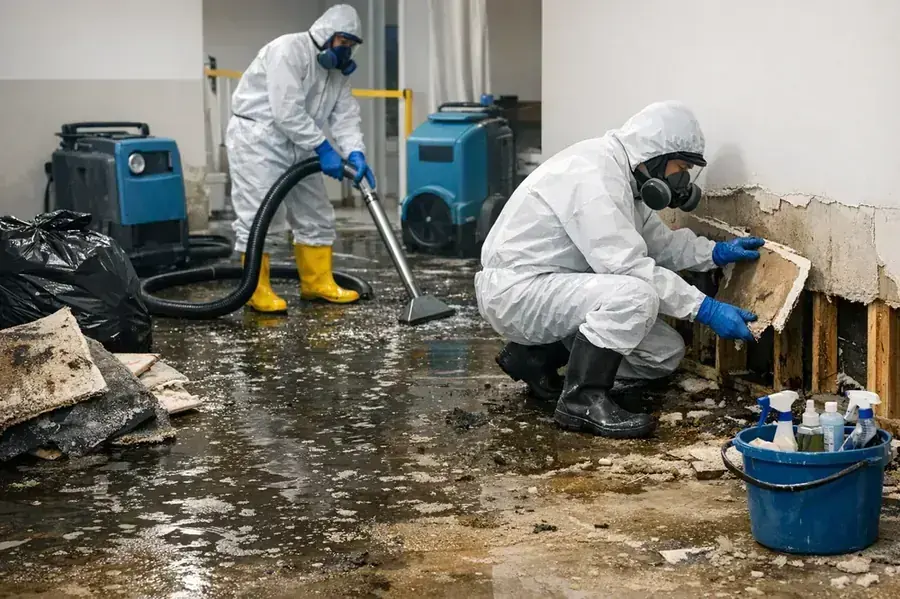
What to do the moment you find a sewage backup
- Stop using water
Do not flush, shower or run appliances, since every drain adds to the backup.
- Keep everyone out
Keep children, pets and anyone with a weak immune system away from the area.
- Do not run the HVAC nearby
Turn off heating or air systems that could pull contaminated air through the house.
- Photograph from a distance
Take photos of the affected area without walking through the sewage.
Sewage backup is Category 3 the moment it happens. It carries bacteria, viruses and other contaminants, and it is handled differently from every other kind of water damage. In Hayward, most residential backups come from the sewer lateral, the private line between the house and the city main.
What does sewage backup cleanup cost in Hayward, CA?
In Hayward, CA, sewage cleanup typically runs $2,000 to $10,000 or more, depending on the square footage affected, how much flooring and drywall must be removed and whether a crawl space or finished room is involved.
- Containment and PPE
- Flooring removed
- Antimicrobial and drying
- Drywall cut high
- HEPA air scrubbing
- Daily readings
- Crawl space cleaning
- Insulation removed
- Extended drying
What moves the number: square footage, the materials removed, containment needs, crawl space involvement and how long the sewage sat. The line repair is separate.
For a closer planning range, try the water damage cost calculator. These are typical ranges, not quotes.
How a sewage backup is handled in Hayward
IICRC S500 is the industry drying standard. It sets the order of the work, and the equipment stays until the readings say dry, not until the room looks dry.
- 01
Map the moisture first
The tech who does the walkthrough traces the source, then maps wet materials with thermal imaging and pinless meters before any equipment goes down.
- 02
Extract the standing water
The extraction crew pulls water with truck-mounted extraction, so it leaves the building instead of wicking into the next room.
- 03
Set the drying to the room
The drying team places air movers to each room's evaporation load and runs LGR dehumidifiers, with desiccants for Class 4 materials.
- 04
Verify dry, then document
Most crews log readings daily and pull equipment once wet materials sit within 2 to 4 points of a dry reference material.
Why Hayward laterals back up
- Older clay and cast-iron laterals in pre-1970 homes that crack or separate at the joints
- Tree roots that grow into those joints and catch grease and wipes
- Grease and so-called flushable wipes that build into a blockage
- Heavy winter storms that push extra water into the sewer system
The first sign is often a gurgling toilet, a slow tub or water rising in a floor drain or shower when a fixture upstairs is used.
How a sewage cleanup is handled
The sewage cleanup crew sets containment with plastic sheeting and negative air where needed, so contamination does not spread to clean rooms. Everyone working wears protective gear: gloves, boots, eye protection and a respirator.
- Standing sewage is extracted and removed
- Porous materials touched by the water, such as carpet, pad, drywall and insulation, are removed, not dried
- Hard surfaces and framing are cleaned, then treated with an EPA-registered antimicrobial at its labeled dwell time
- HEPA air scrubbers run during the work
- Drying starts only after the cleaning and antimicrobial steps
Trade fact: porous materials touched by Category 3 water get removed, not dried. Drywall is usually cut well above the visible water line, following the moisture readings.
After the cleanup
A plumber clears or repairs the line, often with a camera inspection to find roots or a break. Once the structure is clean, treated and dry, rebuilding can start.
For worker and household safety around sewage, see OSHA flood cleanup safety, and for sewer overflow basics, the EPA page on sanitary sewer overflows. Related: toilet overflow cleanup.
Sewage Backup Cleanup coverage across Hayward
The restoration team handles a sewage backup in every Hayward ZIP and the neighboring East Bay communities.
The Hayward restoration crew handles a sewage backup across Downtown, Burbank, Mount Eden, Tennyson, Schafer Park and the Hayward Highlands, plus Castro Valley, San Lorenzo and San Leandro.
ZIP codes 94540, 94541, 94542, 94543, 94544, 94545 and 94557 are all covered.
See every neighborhood and ZIP coveredSewage Backup Cleanup questions in Hayward, CA
Can I clean up sewage myself?
Small, contained spills on hard surfaces sometimes can be, with protective gear. Anything on carpet, drywall or in a crawl space is Category 3 work.
Why can carpet not be cleaned after a sewage backup?
Carpet and pad hold contamination deep in the fibers. Under the IICRC standard, porous materials touched by Category 3 water are removed.
Is it safe to stay in the house?
Keep people out of the affected area. Households with infants, older adults or anyone with health concerns often stay elsewhere until cleanup is done.
Who fixes the sewer line?
A plumber clears or repairs the line. The restoration crew handles the cleanup, disinfection and drying.
What causes sewage backups in Hayward?
Root intrusion and cracks in older clay laterals, grease and wipes, and heavy storms that load the sewer system.
Is sewage backup covered?
Many policies exclude sewer backup unless a specific endorsement was added. Coverage depends on your policy, so it is worth checking with your own insurer.
Sewage Backup Cleanup in Hayward? Call before it spreads.
The longer water sits, the further it wicks into drywall, subfloor and framing. The Hayward water damage pros answer day or night.